Dryer Vent Cleaning in Morton Grove, IL
Morton Grove did almost all of its growing in one decade. U.S. Census Bureau decennial counts put the village at about 3,900 residents in 1950 and over 20,500 by 1960 — better than fivefold growth in ten years, driven in large part by the Edens Expressway's 1951 opening cutting the commute into Chicago. That construction wave is still the housing stock today: 63.8% of Morton Grove's homes were built between 1940 and 1969, and the median home dates to 1961, according to the Chicago Metropolitan Agency for Planning's Community Data Snapshot, which draws on U.S. Census Bureau American Community Survey estimates. A dryer vent installed with a 1961 ranch has now outlived several owners, and on most of these blocks nobody has looked at it since.

Brick ranches, split-levels, and runs nobody has traced
Most of that housing stock is exactly what a 1950s boom produces: 73.9% of Morton Grove's homes are single-family detached, and 85.2% are owner-occupied, per the same Census Bureau data. That split matters for vent maintenance specifically. In an owner-occupied ranch or split-level, deferred duct maintenance is the homeowner's own risk to carry; in the 14.8% of homes that are rented, it is the tenant breathing the humid laundry room while a landlord decides whether to act. Original installations from this era typically used whatever duct material was standard at the time — often ribbed metal that traps lint at every seam — and a house that has had even one laundry relocation since 1961 usually carries dead legs and extra elbows from routing nobody mapped.
That aging duct run sits inside aging masonry, and Great Lakes winters keep working on both. The region averages 42 freeze-thaw cycles a winter, ranging from as few as 23 to as many as 60 depending on the year (GLISA regional analysis) — each cycle a small expansion-and-contraction stress on the brick and mortar a decades-old vent termination is set into. Over six decades of that cycling, mortar joints around an exterior penetration loosen fractions of a millimeter at a time, which is part of why a vent hood that seated snugly when the house was new can develop gaps a duct inspection catches today.
What Morton Grove's own code requires
Routine cleaning is maintenance, not construction, so it needs no permit. New or rerouted duct runs are different: they are mechanical work governed by the 2018 International Mechanical Code, which Morton Grove has adopted with local amendments. Its core requirement is the one every municipality that has adopted the IMC shares — dryer exhaust has to terminate outdoors, never into an attic, crawl space, or wall cavity. Separately, and more specific to Morton Grove than most villages we cover, the village requires any contractor doing business here — other than landscapers and painters — to carry a village contractor's business license backed by a $10,000 surety bond and liability insurance. We carry it. As of 2026, confirm current requirements with the Village of Morton Grove's Building and Inspectional Services Department before scheduling any duct work that goes beyond cleaning.
The 3% that predates the dryer
Not all of Morton Grove is postwar. Just 3.0% of the village's housing, per the CMAP snapshot, was built before 1940, back when the household clothes dryer barely existed as an appliance. One surviving example is the Herbert A. Dilg House at 8544 Callie Avenue, a Chicago bungalow built around 1925-26 by a Morton Grove mayor and listed on the National Register of Historic Places since 2009. Houses from this small pocket never had a duct designed into the original plan — whatever routing they have now was cut through walls built for something else, usually decades later. If your house predates the boom, assume nobody has ever traced the full run, and let the inspection map it before anyone quotes a number.
Tree City USA, and what it means for your vent hood
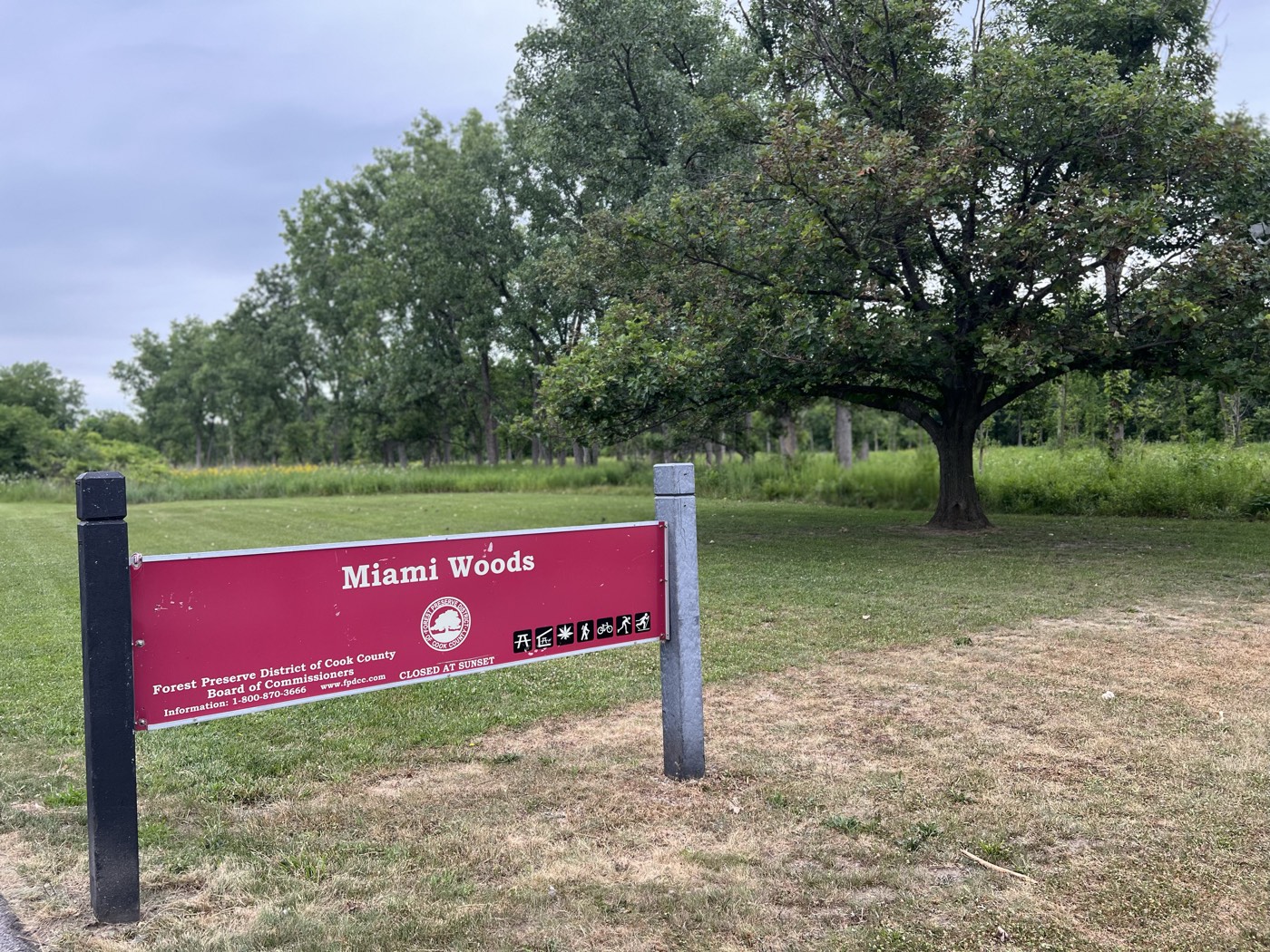
Morton Grove has been recertified as a Tree City USA community by the National Arbor Day Foundation every year since 2000, and the village's own Forestry Division maintains roughly 11,000 trees on public parkways and municipal property — before counting the Miami Woods and North Branch forest preserves that wrap the village. The North Branch of the Chicago River runs through the middle of the village, with forest preserve land on both banks, which puts a lot of Morton Grove vent hoods a short flight from prime nesting habitat. That canopy is a genuine asset and a genuine vent problem: an exterior hood is exactly the sheltered, gently warmed opening that collects seed fluff in early summer and draws nesting starlings and house sparrows every April. Removing an active nest has legal wrinkles — our guide to birds in dryer vents under Illinois and federal law covers what a homeowner can handle directly — and it is worth checking the termination each spring regardless of when the last full cleaning happened.
What a visit includes
Here is what happens on a typical Morton Grove house. Most single-family visits run 45 to 90 minutes; a long-neglected run, a roof termination, or heavy tree debris at the hood adds time.
1. Inspection and quote. We trace the actual route — for Morton Grove's ranches that usually means a basement laundry running to a low sidewall vent, though split-levels and any post-1961 addition can route differently. The full job is quoted before anything is touched.
2. The transition hose. The flexible connector behind the dryer, where lint concentrates most densely, gets disconnected, cleared, and reseated.
3. The full duct run. A rotary brush works every foot and every elbow of the concealed run while a high-volume vacuum pulls the loosened lint out behind it.
4. The exterior termination. Cleared of lint, seed fluff, and nesting material — see the Tree City note above — with the hood flap checked for free swing.
5. Airflow verified, before and after. A reading at the start sets the baseline; the same test afterward, with photos of what came out, proves the difference.
If the inspection turns up a crushed section or duct that needs replacing rather than cleaning, that is dryer vent repair, and you will hear about it before it is added to any bill — not after.
What it costs in Morton Grove
Angi's 2026 Chicago-market pricing guide breaks cost down by termination location: basement and first-floor terminations run $80 to $185, second-floor runs $110 to $185, and roof terminations run $150 to $250. Most Morton Grove ranches and split-levels terminate low at or near grade, so the basement/first-floor figure is the typical quote here — firm after the run is traced, never estimated over the phone. Citywide, Angi puts the Chicago average at $173, with most homeowners paying $129 to $222 (up to $350 for the hardest setups), though your job is quoted individually rather than by citywide average. What moves you within the range:
Duct length and elbow count. A short, straight basement-to-sidewall run — Morton Grove's most common setup — sits toward the low end. A rerouted run with extra elbows from an old remodel takes longer to brush and costs more.
Sidewall vs. roof termination. Most Morton Grove ranches and split-levels terminate low, at or near grade — the fastest and cheapest termination to reach. A roof termination means ladder work and pushes toward the top of the range.
Years since the last cleaning. A vent that has never been cleaned, or has not been touched since a decades-old remodel, holds more lint and takes longer to clear.
Condo and multi-unit buildings. 17.5% of Morton Grove's housing sits in buildings of 20 units or more, per Census Bureau data — a real share of condo and apartment stock. Those jobs are quoted per building, with per-unit documentation supplied to the association.
Spring nest removal, when that is the actual job rather than routine lint, runs $150 to $350 including sanitizing and a code-compliant guard if you want one — see bird nest removal for what that covers.
What to look for
A page asking for your Morton Grove address should say plainly what it is committing to. We're the crew that covers Morton Grove — your request comes straight to us, not five companies competing for your number, and the price you're quoted is firm, with nothing marked up. More on how we work.
Morton Grove requires a village contractor's license, surety bond, and liability insurance for this work — ask to see all three. Here is what to look for before you book: proof of insurance, a written quote agreed before work starts, and photos of the completed job.
The number quoted before anyone touches the duct should be the number you pay, with nothing added after without your approval.
Dryer vent services in Morton Grove
Cleaning is not always the whole story on a sixty-year-old duct. If the inspection finds a crushed section, degraded foil, or a run that needs rerouting rather than clearing, that is dryer vent repair. If birds beat you to your vent hood this spring, see bird nest removal. For the mechanics that apply everywhere we work, see the main dryer vent cleaning page; for ductwork beyond the dryer, see air duct cleaning.
Nearby areas
We also cover Niles, Skokie, Glenview, and Park Ridge.
Sources
- Chicago Metropolitan Agency for Planning — Community Data Snapshot: Morton Grove (June 2026 release, sourced from U.S. Census Bureau American Community Survey five-year estimates)
- U.S. Census Bureau — Decennial Census population counts for Morton Grove village, 1950 and 1960, as compiled in Morton Grove, Illinois
- Village of Morton Grove — Trees / Forestry Division
- Village of Morton Grove — Building and Construction Codes
- Village of Morton Grove — Building and Inspectional Services Department (contractor licensing and bonding)
- National Register of Historic Places — Herbert A. Dilg House
- Angi — How Much Does Dryer Vent Cleaning Cost in Chicago, IL? (2026 pricing guide)
- GLISA (Great Lakes Integrated Sciences and Assessments, University of Michigan) — Freeze-Thaw Cycles
Get your Morton Grove duct traced before next spring's nests move in.
Call (224) 327-6827Morton Grove questions
How much does dryer vent cleaning cost in Morton Grove?
Most Morton Grove single-family homes have a basement laundry running to a low sidewall termination, and Angi's 2026 Chicago-market pricing guide puts that basement/first-floor termination range at $80 to $185 — the typical case here, quoted firm after we trace the duct. A roof termination, a rerouted run, or a vent that has never been cleaned moves you into Angi's broader Chicago range, which averages $173 with most homeowners paying $129 to $222 (and up to $350 for the hardest setups). Condo and apartment buildings are quoted per building, not per unit.
How old are the dryer vents in Morton Grove homes?
Often as old as the house. The median Morton Grove home was built in 1961, and 63.8% of the village's housing dates to the 1940-1969 construction boom that followed the Edens Expressway's 1951 opening, according to Census Bureau American Community Survey data. Unless a remodel touched the laundry room, the duct behind your dryer is likely original equipment pushing sixty-five years old.
Does Morton Grove require a permit for dryer vent cleaning or repair?
Cleaning does not — it is maintenance under the village's code, not construction. New or rerouted duct runs are mechanical work governed by the 2018 International Mechanical Code the village has adopted, which requires exhaust to terminate outdoors, never into an attic or crawl space. Separately, Morton Grove requires any contractor doing business in the village — other than landscapers and painters — to hold a village contractor's license backed by a $10,000 surety bond and liability insurance; we carry it. Confirm current requirements with the Village of Morton Grove before scheduling any duct work.
Can I clean my own dryer vent, or do I need to hire someone?
You can safely clear the flexible transition hose behind the dryer yourself with a vent brush — that part is genuinely a DIY job. What you usually cannot reach is the concealed run behind Morton Grove's finished basements and split-level walls, or a roof termination if the laundry is upstairs; those need rotary brushing and vacuum extraction most homeowners do not own, and roof access carries real fall risk. If your setup is a short, accessible, ground-floor run you have cleaned before, a competent DIYer can handle it. Once it disappears behind drywall or goes up, that is where calling us earns its cost.
Why do Morton Grove dryer vents clog with more than lint?
Trees. Morton Grove has been recertified as a Tree City USA community every year since 2000, and the village's Forestry Division maintains roughly 11,000 trees on public parkways and municipal property, on top of the Miami Woods and North Branch forest preserves running through town. Every spring, seed fluff and nesting starlings and house sparrows find the warm, sheltered opening of an exterior vent hood. It has nothing to do with laundry habits and everything to do with what is blocking the termination.
Do you clean dryer vents in Morton Grove condo and apartment buildings?
Yes — we take condo and multi-unit work. Morton Grove is mostly single-family — 73.9% of its housing is detached, per Census Bureau data — but 17.5% of units sit in buildings of 20 or more, a real share of condo and apartment stock. Those jobs are quoted per building rather than per unit, with documentation for each unit supplied to the association or property manager.